FAIR RUBBER SUPPLIER PARTNERS

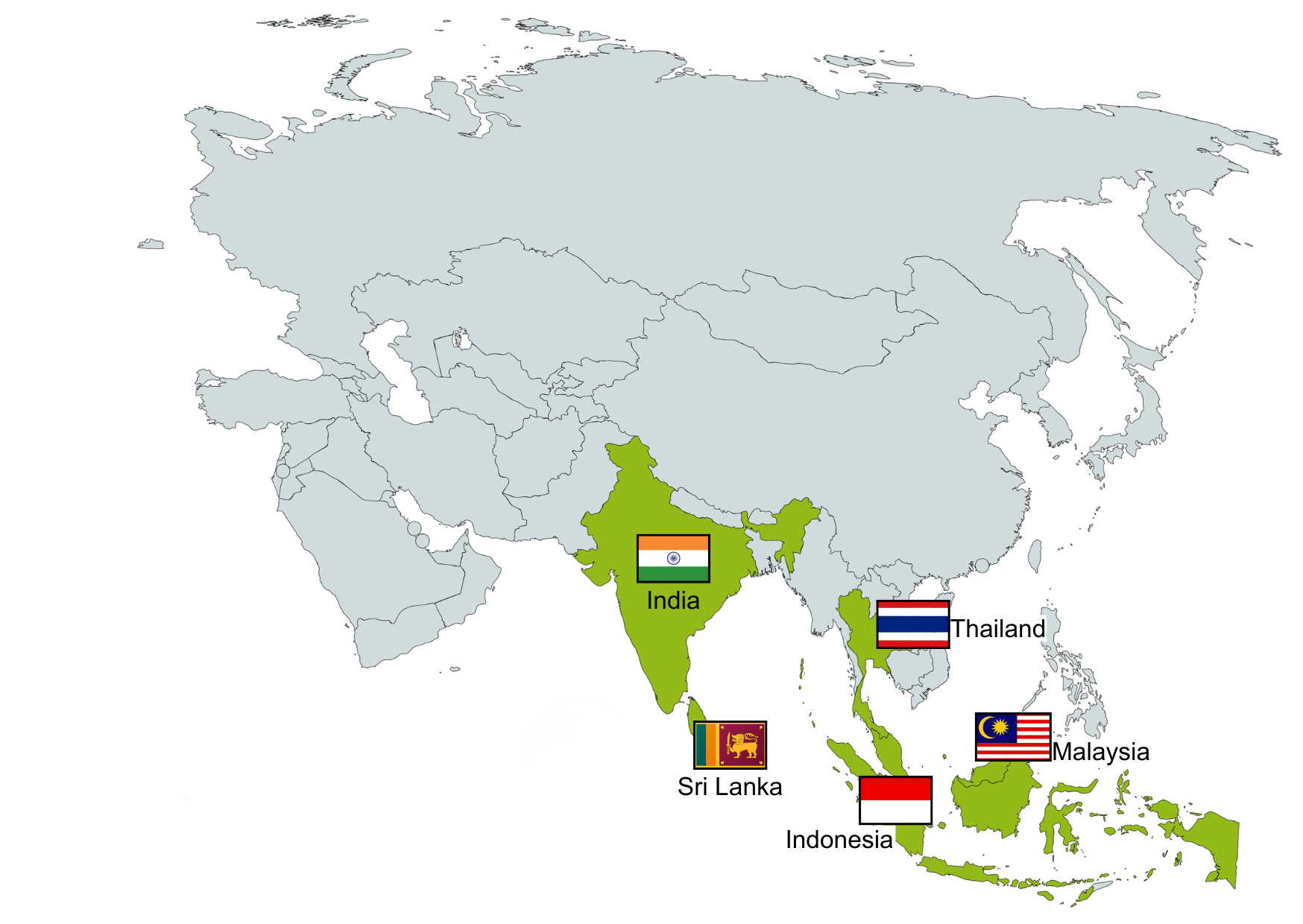
Fair Rubber works with a wide variety of supplier partners in six countries. These include both small and large plantations, as well as groups of smallholder farmers and tappers who have joined forces. Plantation management is responsible for ensuring compliance with the Fair Rubber standard. Smallholder farmers are responsible for this themselves. 
Fair Rubber premium payments go to Fair Rubber e.V.’s supplier partners. The people themselves decide how the premiums are used: Plantations have “joint bodies” made up of workers and management representatives who democratically decide on the allocation. For smallholder groups, this is done at their general assembly of members or the elected board. Fair Rubber currently works with the following suppliers:

Fair Rubber currently works with the following suppliers:

India 

  • New Ambadi, a plantation in southern India
  • Velimalai Rubber Co. Ltd., a plantation group in southern India

Sri Lanka 

  • Frocester, a plantation belonging to the Horana Group, the first partner
  • Lalan Rubbers Ltd., a plantation group
  • Associated Speciality Rubber Latex Farmers, a smallholder cooperative
  • Kelani Valley Plantations Ltd., with two plantations

Thailand

  • Klong Pom Phatthana 95, a group of smallholder farmers in Hat Yai
  • Surat Thani Sustainable Rubber Producers Association (SRA), a large group of smallholder farmers
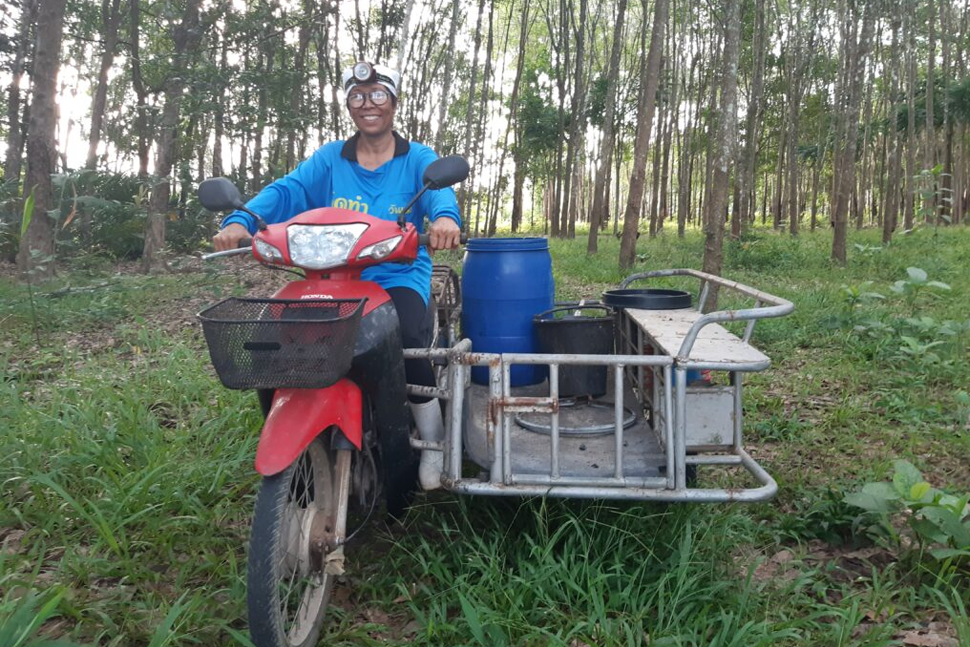
  • Sadao Group, a small group of rubber tappers
  • Ban Wang Sai Fair Trade Rubber Group (BWS), a very small group of smallholder farmers

Indonesia

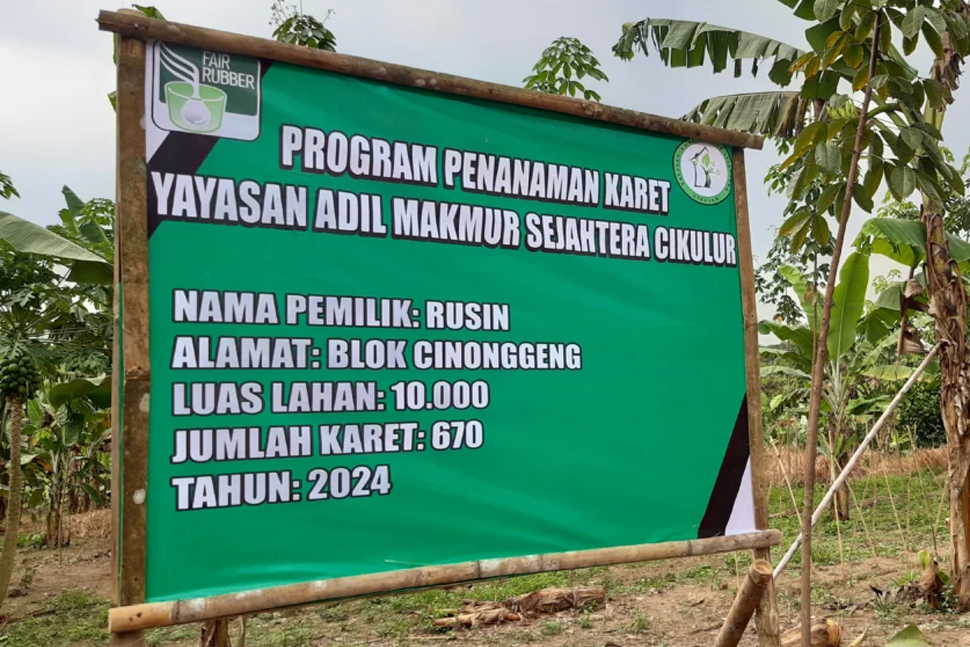
  •  Yayasan Adil Makmur Sejahtera Cikulur, a large group of smallholder farmers and rubber tappers
  • Yayasan Cahaya Nuwa, a mid-sized group of smallholder farmers and rubber tappers

Malaysia 

  • Minh Lap, a small family-owned and owner-managed plantation with 41 tappers and workers 

Vietnam

  • Minh Lap, a small family-owned and owner-managed plantation with 41 tappers and workers

New Ambadi, India

The New Ambadi plantation is located at the southern tip of India, not far from Cape Kanyakumari. About 400 rubber tappers and another 200 field workers are employed here. Rubber is cultivated on approximately 582 hectares. The centrifuge plant on the plantation grounds produces high-quality Cenex liquid rubber (e.g., for condoms or mattresses). New Ambadi is one of the first partners of Fair Rubber. The plantation hospital, which is free of charge for patients, also serves all the surrounding villages. In recent years, the Fair Rubber Premium has been used, among other things, for medical care, educational scholarships, small loans for weddings or house construction, as well as community projects such as school toilets and rain jackets for schoolchildren.

Velimalai Rubber, India

Velimalai Rubber Co. Ltd.is a joint venture between two plantation groups in the southern Indian states of Kerala and Tamil Nadu. Approximately 40 to 50 rubber tappers work on the plantations. Their rubber is processed at the Kurian Abraham factory, which specializes in rubber gloves and also supplies latex for condom production.

Frocester, Sri Lanka

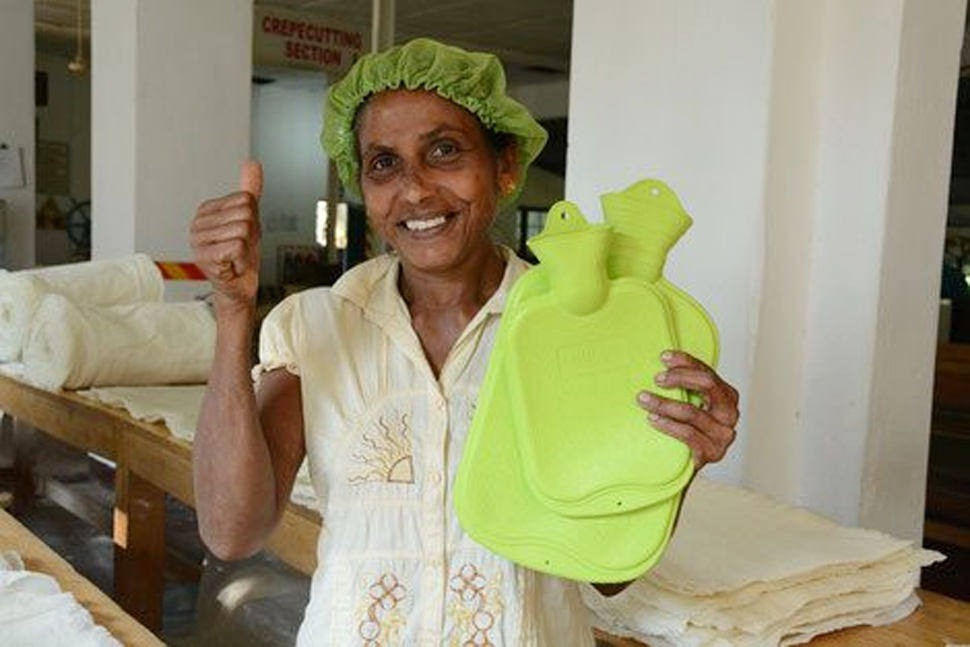
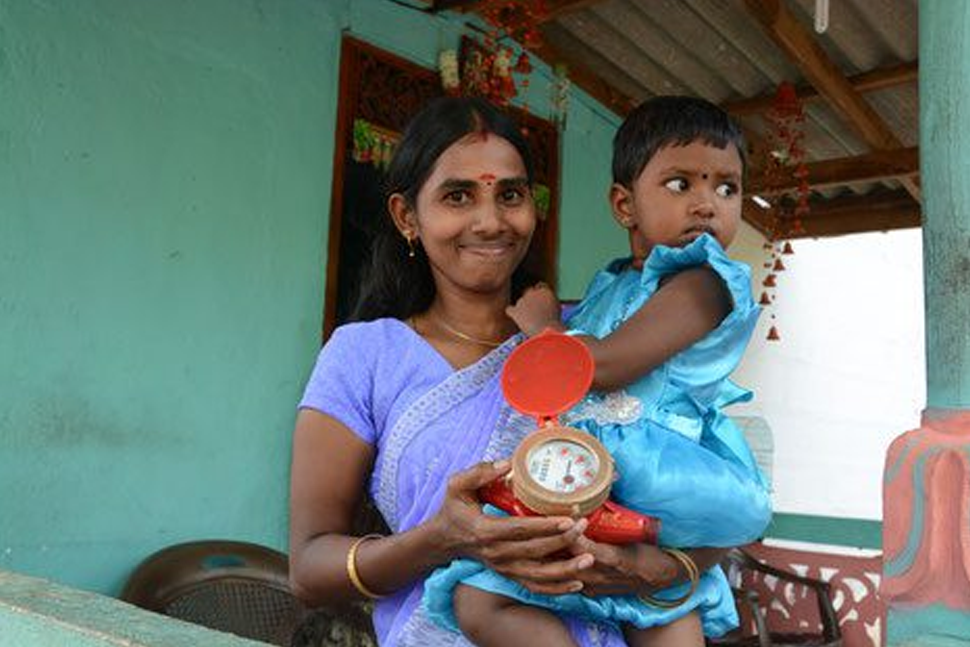
The Frocester plantation is part of the Horana Group. It is located in the hilly southern region of Sri Lanka, about eleven kilometres from the town of Horana. The plantation primarily produces rubber, along with smaller quantities of cinnamon. Approximately 400 people work on the plantation and in the factory. Most of the workers are housed in homes on the plantation. Rubber from the Frocester Plantation is used in products such as sneakers and hot water bottles. The Fair Rubber premiums have funded several water tanks, the construction of a training centre, and a bridge connecting various parts of the plantation to the nearest town (school, hospital). During the COVID-19 pandemic, the premiums were used to provide employees with food packages.

Lalan Rubbers, Sri Lanka

Lalan Rubbers Ltd. consists of a group of 13 plantations located in various parts of Sri Lanka. Lalan Rubbers has been a supplier partner since the Fair Rubber Association was founded. Lalans natural rubber is
suitable for products such as household and gardening gloves, rubber bands, balloons, and mattresses. Unfortunately, following a fire at the mattress factory, this supply chain was interrupted for a time. In the meantime, a completely new facility has been built. The premium was used, for example, to improve the drinking water supply for hundreds of families, purchase playground equipment for kindergartens, and restore a bridge that had been severely damaged by a truck. In addition, the Fair Rubber Premium helped to repair the roofs of the homes of employees nand their families.
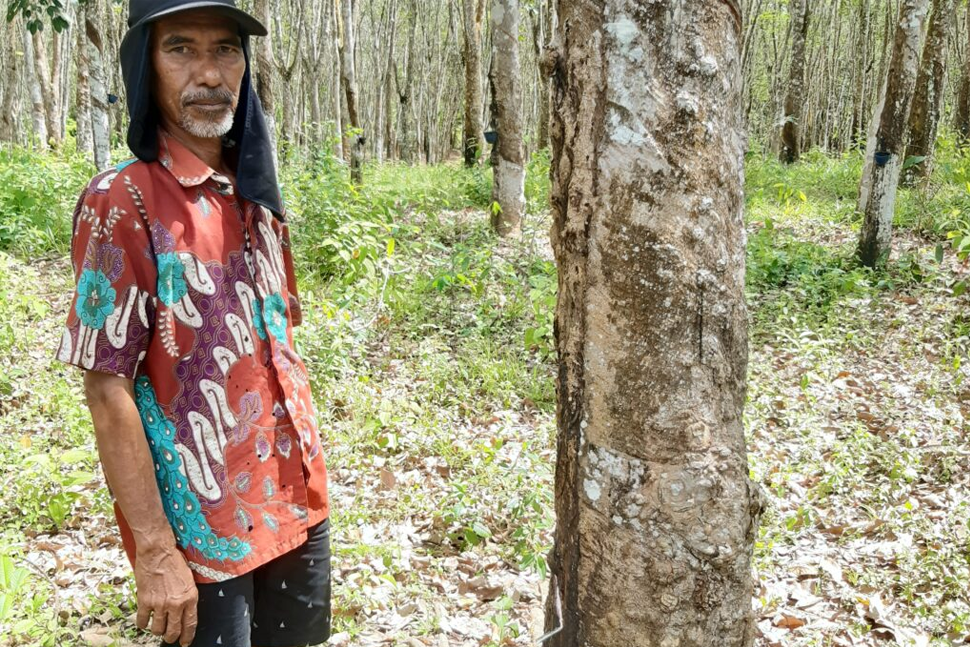
Associated Speciality Rubber Farmers, Sri Lanka

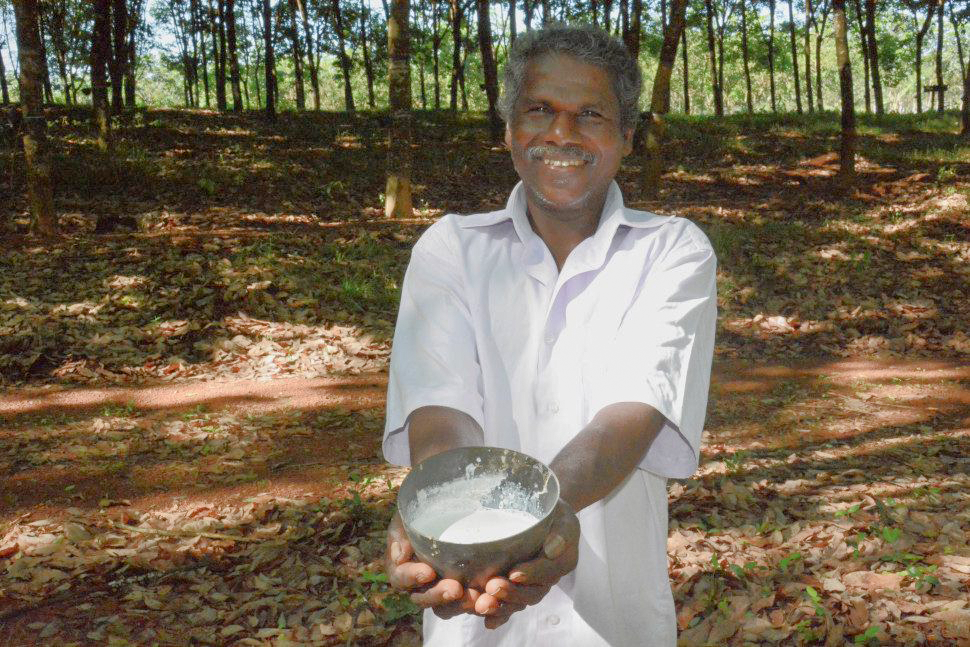
About 560 smallholder farmers and rubber tappers in the heart of Sri Lanka have formed a cooperative that supplies its raw material to Associated Speciality Rubbers (ASR). There, the natural rubber is processed into various grades of dry and liquid rubber, including specialty products. ASR is an unusual processor: it tries to pay its members and suppliers a better price—but market pressures do not allow for this. The Fair Rubber premium is intended to fill this gap. Each year, the cooperative elects a committee in which all 20 latex collection centers must be represented. In exchange for a small monthly fee, members benefit from the premium. At Christmas, they receive a food package from ASR worth more than the membership fee. The Fair Rubber premium is invested in education: for example, schoolchildren have received vouchers for school supplies, and university students have received financial support.

Kelani Valley Plantations, Sri Lanka

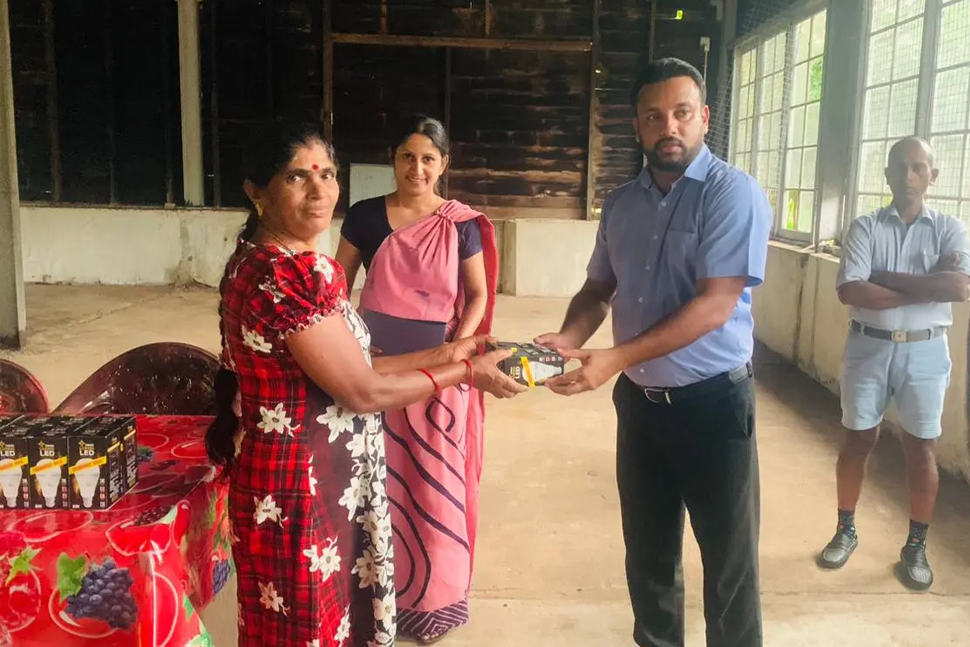
Two rubber plantation of Kelani Valley Plantations Ltd., based in the Yaninatota region of Sri Lanka, have been Fair Rubber certified since 2021. Kelani Valley holds FSC (Forest Stewardship Council™) certification for all of its plantations. One of the two rubber plantations is also certified organic. In addition to rubber, the company cultivates tea, cinnamon, and coconuts and employs approximately 10,000 people. The natural rubber produced by Kelani Valley is mainly used as sole crepe, latex crepe, and centrifuged latex. The employees and their families
benefit from the Fair Rubber Premium: These have been invested, among other things, in energy-saving emergency light bulbs for the workers, which function reliably even during power outages.

Green Net Kooperative, Thailand

The Green Net Cooperative (GNC) has been registered as a “service cooperative” with the Thai Ministry of Agriculture and Agricultural Cooperatives since 1993. GNC is a social enterprise that promotes organic farming and fair trade. Sixty-six of its members are certified for organic coconuts and, more recently, for natural rubber. Of particular importance for Fair Trade: The farmers share all benefits from the Fair Rubber premiums with the rubber tappers—who are often migrants and work under harsh conditions. They tap the rubber early in the morning when it is cold. This is because as soon as the sun rises, the latex milk coagulates too quickly. GNC’s natural rubber is used to manufacture flip-flops.

Klong Pom Phatthana 95, Thailand

In southern Thailand (Hat Yai District), 68 smallholder farmers have joined forces to form the Klong Pom Phatthana 95 group. The smallholders have mainly used the Fair Rubber Premium to cushion the impact of fluctuating market prices and to invest in projects that open up additional income opportunities for members. They deliver their collected latex milk to a factory, where it is processed into latex suitable for medical and health-related products such as condoms or soothers and teats for babies.

Minh Lap, Vietnam

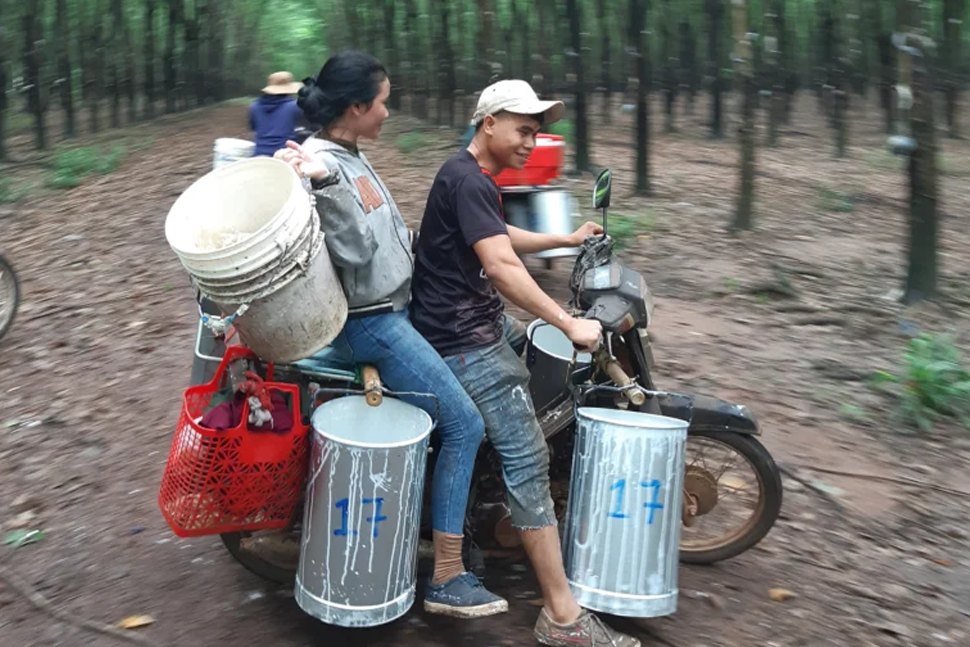
The Minh Lap plantation has been working with Fair Rubber since the summer of 2026. Rubber is grown on 150 hectares and supplied directly to the Mai Vinh processing plant. The plant is situated next to the plantation and is owned by the same person. Minh Lap holds FSC certification.

Surat Thani Sustainable Rubber Producers, Thailand

The group Surat Thani Sustainable Rubber Producers Association (SRA) in Thailand has more than 1,000 members and has been a Fair Rubber supplier partner since 2022. The smallholder farmers have achieved a high degree of self-organization: using the Fair Rubber premium as seed capital, they are implementing over 15 projects to generate additional income. The activities are carried out by small groups of members and supported by experts at the SRA office. Examples of such premium-funded activities include mushroom cultivation, fertilizer production, and pig farming. The premium also funds training for members to help improve cultivation and harvesting practices. The rubber harvested here is primarily used for latex products such as condoms.

Sadao Group, Thailand

The Sam Nak Wa Fair Trade Community Enterprise – Sadao group in Songkhla District currently has approximately 80 members. As a relatively new group with Fair Rubber, it recently completed the process of visiting all members, collecting their data, and reviewing their cultivation and tapping practices. The group used the first premium payments to fund this process. Their high-quality latex is suitable for condom production, and the group is currently seeking additional buyers.

Ban Wang Sai Fair Trade Rubber Group, Thailand

The Ban Wang Sai Fair Trade Rubber group was formed to sell its high-quality rubber in accordance with Fair Rubber criteria and to receive the Fair Rubber premium. With 15 members, the group is still in its early stages. Structurally, it can rely on the Ban Wang Sai Village Fund, a local, registered association that has been supporting the village community since 2007 through microloans and various activities. The association also owns and operates a latex factory that employs 38 people. Here, latex blocks are produced and sold.

Yayasan Adil Makmur, Indonesia

In the Lebak Banten region of Java, about one to two hours’ drive from
Jakarta, smallholder farmers and tappers have joined forces to establish
the Yayasan Adil Makmur Sejahtera Cikulur (a typical form of rural
organization in Indonesia). The group has approximately 4,000 members
and receives strong support from the rubber buyer and the nearby
primary processor. Their rubber is suitable, for example, to manufacture
bicycle tires. The Fair Rubber Premium is distributed among many
members and makes a small contribution to improving their income
situation. The premium has also been used to renovate a school, prayer
rooms, and employee housing. Other important projects include an
agroforestry initiative and the provision of drinking water to residential
buildings.

Yayasan Cahaya Nuwa, Indonesia

The Yayasan Cahaya Nuwa group on the island of Sumatra is growing steadily and currently has about 240 members. Of these, 60% own their own plantations, while the remaining members work as tappers on rubber plantations. Their rubber is suitable to manufacture tires. So far, the group has used the Fair Rubber Premium to purchase fertilizers and tools for the plantations, among other things. It has also invested in social assistance programs for local communities. In addition, the group plans to build its own composting facility to produce organic fertilizer at a low cost.